
Masking, not blocking
Sound does not cancel sound in a bedroom. What steady noise does is reduce the contrast between the quiet background and the sudden spike — the door, the shout, the bin lorry. If the spike is only a little louder than the constant sound, it is far less likely to register. That is why moderate, continuous noise works and why a loud, looping track with a seam works less well: the seam itself is a spike.
Match the color to the problem
Different noise colors put their energy in different places, so they cover different things:
- Traffic, footsteps upstairs, washing machines, bass through a wall — low frequency. Reach for Brown Noise.
- Voices, TV, children, birds — mid and high frequency. Reach for White Noise.
- A bit of everything, or you are not sure — Pink Noise, then adjust.
- Everything at once — layer Brown under White in the mixer.
Level: the most common mistake
People turn masking noise up until it is loud, which is tiring and unnecessary. The right level is the lowest one that makes the specific problem sound fade into the background. A good test: with the noise on, you should still be able to hear someone speaking directly to you in the room. Place the phone or speaker across the room, not next to your head — distance evens out the sound and keeps the level at your ear moderate.
Why a generated sound masks better than a loop
A recording that loops has a moment where it restarts, and a half-asleep brain is good at noticing changes. Procedural generation, as in ShiftSleep AI, produces the noise continuously with no seam, so the background stays genuinely constant for the whole sleep window. It also means the sound never runs out and works with no connection.
This guide is general information for shift workers, not medical advice. ShiftSleep AI does not diagnose or treat sleep disorders. If your sleep problems persist or you have symptoms such as breathing trouble during sleep, talk to a clinician.
Steps
- Name the noise that wakes you
Spend one day sleep paying attention: is it the street (rumble), the household (voices, footsteps), or both? Write it down or just remember the category.
- Pick the matching color
Rumble → Brown Noise. Voices and sharp sounds → White Noise. Unsure → Pink Noise. In ShiftSleep AI each is its own generator on the free tier.
- Set a moderate level
Start low and raise the room level until the problem sound fades, then stop. You should still hear someone speaking to you. Put the phone across the room.
- Layer if one color is not enough
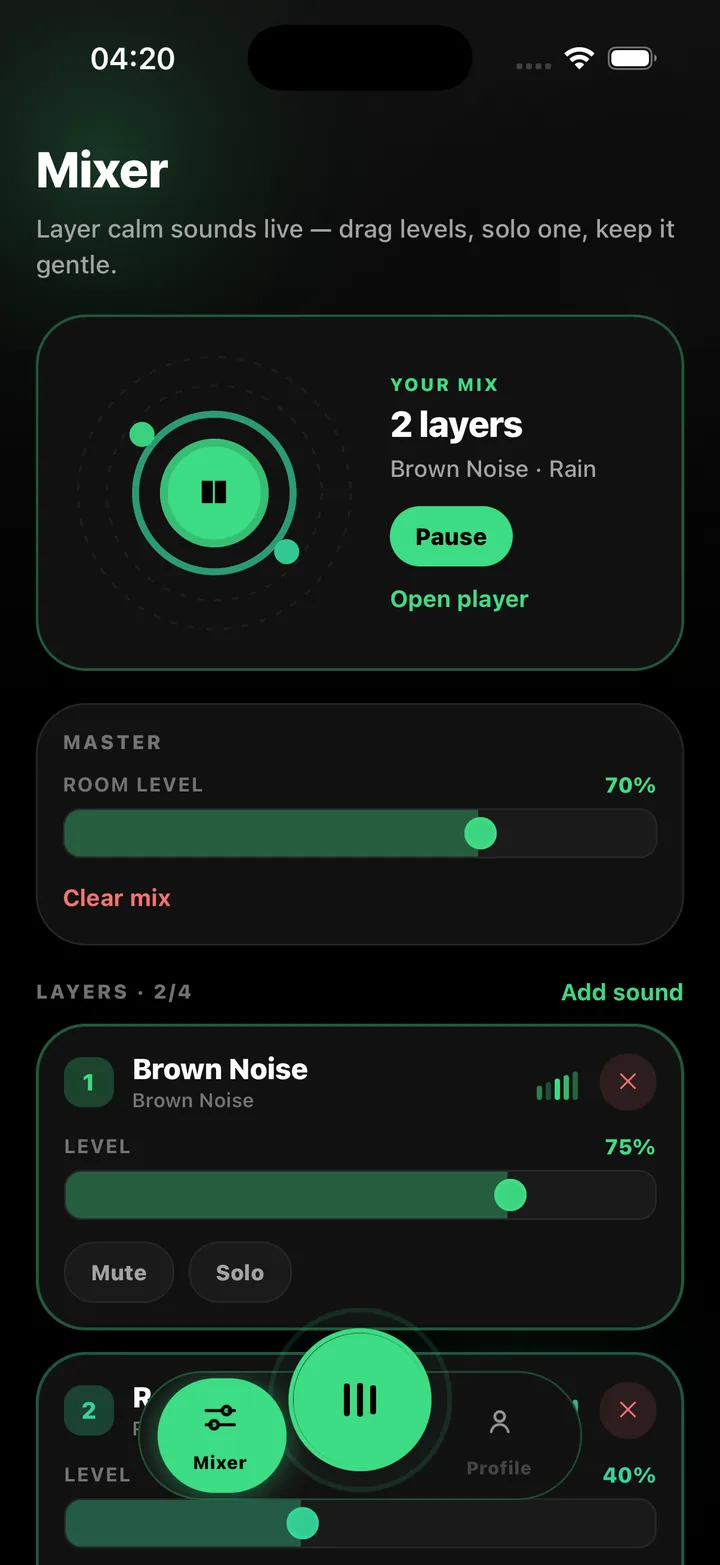
Open the mixer, add a second layer — Brown under White covers rumble and voices together. Solo each layer to hear what it contributes, then balance.
- Add texture if pure noise feels harsh
Rain over brown noise, or Fan over pink, gives the mix a more natural feel at the same masking level. Save the result as a favorite.
- Set the fade timer and sleep
Choose a timer that matches how long the noise problem lasts, or all day. The fade-out prevents the hard stop that wakes you at the end.
Frequently asked questions
Does white noise block noise completely?
No. It masks: it reduces how much sudden sounds stand out. Very loud or very close noises will still come through; earplugs plus a moderate noise bed is a common combination.
Should I use headphones?
For sleep, a phone or speaker across the room is usually more comfortable and keeps the level at your ear moderate. If you use earbuds, keep the volume low.
Which color is best for a snoring partner?
Snoring is mostly low and mid frequency; many people start with Brown or Pink Noise and add a little White if the higher rasp comes through. Adjust by ear.