The three colors in one paragraph each
White noise has equal power at every frequency. Because our ears are more sensitive to high pitches, it sounds bright and hissy, like an untuned radio. It is the most effective mask for voices and sharp sounds, and the most tiring to have on loud.
Pink noise loses three decibels per octave as pitch rises, which happens to match how we perceive loudness, so it sounds even and natural — steady rain or wind. It is a good default when you are not sure what is waking you.
Brown noise loses six decibels per octave, so nearly all its energy is in the bass. It sounds like a waterfall heard from indoors or a plane cabin: a deep, soft roar. It covers rumble — traffic, footsteps, machines — and many people find it the most comfortable for long sessions.
And green noise?
Green noise is a looser term for noise centred on the middle of the audible range, sometimes described as the sound of nature without the low rumble or the high hiss. In ShiftSleep AI it sits alongside the other colors as a mid-band option. Blue and grey noise also exist as technical variants, but for sleep the practical choice is almost always between white, pink and brown.
Quick chooser
- Voices, TV, chatter, birds → White
- Traffic, thumps, machines, bass → Brown
- Mixed or unknown → Pink
- Prefer a natural feel → Pink or Green, or add Rain to any color
- Everything → Brown under White in the mixer
Do not overthink it
The best color is the one you can leave on for a whole day sleep without noticing it. Differences between colors are real but modest compared with getting the level right and keeping the sound continuous. A generator such as ShiftSleep AI lets you switch between them with one tap and layer them, so testing costs nothing.
This guide is general information for shift workers, not medical advice. ShiftSleep AI does not diagnose or treat sleep disorders. If your sleep problems persist or you have symptoms such as breathing trouble during sleep, talk to a clinician.
How to test which color works for you
- Start with Pink for one sleep
Play Pink Noise alone at a moderate level for a full day sleep. Note what still woke you, if anything.
- Swap to Brown if rumble got through
If it was traffic, footsteps or machines, play Brown Noise for the next sleep at the same level.
- Swap to White if voices got through
If it was people, TV or high sounds, play White Noise for the next sleep. Keep the level moderate — white feels louder than it is.
- Layer the two that helped
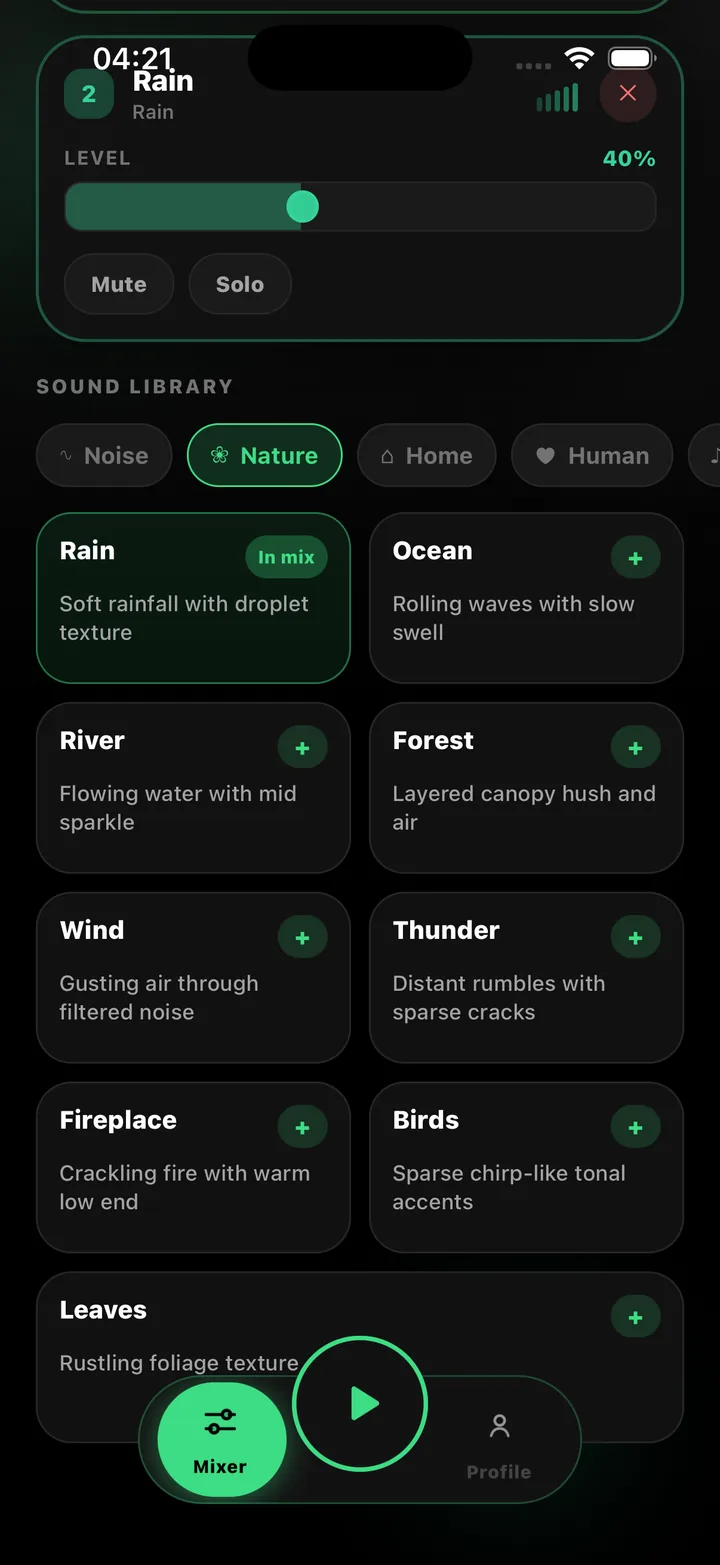
In the mixer, put Brown under White or Pink and balance with the level sliders. Solo each layer to hear what it adds.
- Save the winner
Save the mix as a favorite so it is one tap on Home after the next shift, then stop experimenting for a while — consistency is part of what makes it work.
Frequently asked questions
Is brown noise the same as red noise?
Yes, the terms are used interchangeably. Brown refers to Brownian motion, not the color.
Is pink noise better for deep sleep?
Some people prefer it and some research has looked at it, but this app makes no medical claims about sleep stages. Choose the color that keeps your room steady and comfortable.
Do these sounds loop in ShiftSleep?
No. All colors are generated live, so there is no repeating segment.